
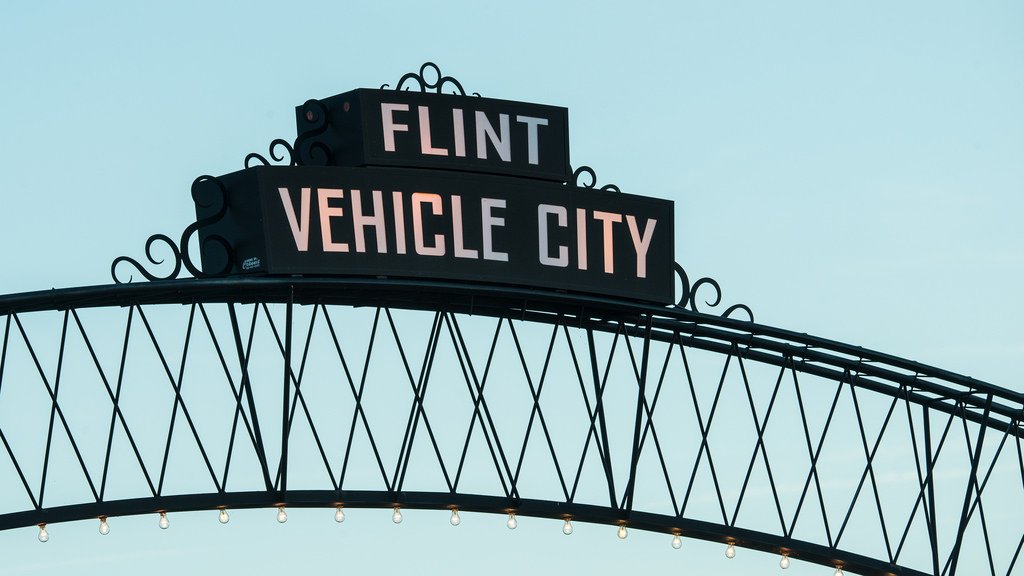
Bromberg’s Director of Operations Cathy Radloff has been with the company since 2010, and in that time she has become both the lynchpin of our day-to-day operations and a passionate supporter of our community outreach and service initiatives. She was deeply involved in Bromberg’s recent work in supporting the collective response to the Flint Water Crisis and in the company’s continued community service and cultural awareness programs in Hamtramck and throughout Michigan.
In this interview, she discusses Bromberg’s philanthropic work and the important role language access plays in coordinating community service efforts.
How did Bromberg get involved with the response to the Flint Water Crisis?
That would have been through MONA – the Michigan Office for New Americans. Our main contact over at MONA, we actually had a relationship with for years and years. She actually worked at a law firm that we were doing translation work for, and when she left the firm, she let us know she was going over to MONA, and so we checked in with her every now and then, just saying “Hey, how are ya?” Then our [Business Development Specialist] Wendy Yuille, who goes to a lot of marketing events, ran into her, reminded her who we were, and then she reached out. It’s been a happy marriage ever since.
And what exactly did Bromberg do as a part of the collective response?
We translated literally hundreds of documents informing the population of Flint – and their main foreign language needs there are Arabic, Chinese, Hmong, and Spanish — hundreds of documents letting the population know what was going on, how the government was taking efforts to stop it and correct it, and how the population could take action to protect themselves, their children, their pets, their environment, everything. And we also did numerous videos for the Deaf community with interpreters signing the text of the documents in American Sign Language.
Right on the front page of the Michigan.gov water crisis website, there are links to several languages, and there’s a link to each and every PDF that we translated into the target languages, and there are links to all of the ASL videos that we produced, too. Another really cool thing about the ASL videos is that we were able to include the Deaf community on this project, several of whom were residents of Flint. I was so happy about that.
Why is it important to develop some kind of language access measure in responding to disasters like the Flint Water Crisis?
From a legal standpoint, it’s against the law not to. But just from a human standpoint, it would be immoral not to. In Flint, there’s such a hugely diverse population – a huge portion of which don’t speak English that well, or at all, or who are Deaf – and meaningful language access really saves lives. It did save lives.
What other philanthropic efforts are Bromberg involved in?
We worked really closely with the Friendship House here in Hamtramck, and helped them win a Community Foundation for Southeast Michigan grant. What that money is going towards is to help build a greener Hamtramck. They’re planting gardens and they’re also helping to teach people who don’t speak English about the importance of nutrition, and about how to find the ingredients and spices and things that they’re accustomed to from their home countries in Hamtramck so that they feel they’re a part of their community, and don’t feel rejected.
What else does Bromberg do to support organizations’ outreach efforts?
We provide cultural awareness training and promote cultural competency to help bring communities together and seriously bridge linguistic gaps, to help not only businesses but individuals work together in a community.
One example of that would be the work we did with MSHDA – the Michigan State Housing Development Authority. They were working on building business relationships globally with countries like China and Qatar, and they needed help with knowing what to do, even right down to, you know, knowing how to greet individuals from those countries, or how to close a deal with them. So we provided them with some really hands-on cultural awareness training.
And in general terms, what would you say is the role of language access and cultural awareness in philanthropic efforts?
First, I feel language access is essential for businesses today to survive, but it’s just as essential to help give them back to the community that’s giving to them. There are so many different cultures everywhere, and if you don’t immerse yourself in them or at least educate yourself to know how to work with and how to communicate with people from those cultures effectively, you’re never going to be able to take that step forward and really be able to help them in a productive way.