

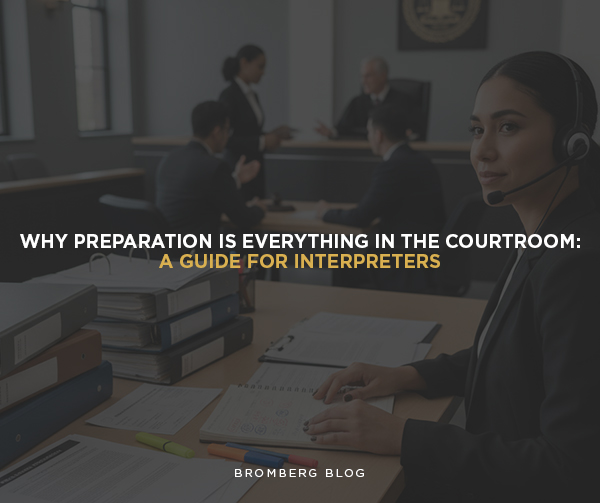
Court interpreting is one of the most demanding roles in the legal system. It requires far more than bilingual fluency—it demands precision, neutrality, deep legal knowledge, and emotional resilience. Interpreters are essential to ensuring that everyone, regardless of language, has access to justice. In high-stakes environments like courtrooms, one misinterpreted word can shift the course of a case. That’s why preparation isn’t optional—it’s foundational.
Each hearing, arraignment, or preliminary examination comes with its rhythm, language, and set of expectations. Judges may speak quickly, attorneys might use idiomatic phrases or legal jargon, and nervous respondents often say things impulsively. In these moments, interpreters must be more than reactive—they must be trained, confident, and aware of their professional boundaries. And while much of this readiness comes with experience, a strong foundational guide can make the learning curve less daunting.
Over the years, I’ve seen how interpreters struggle with things that are rarely taught in language courses—things like navigating a master calendar hearing in immigration court, interpreting inmate slang during sentencing, or recognizing when a judge is “off the record.” These challenges are not about vocabulary alone; they are about context, ethics, and a profound understanding of how the U.S. legal system operates.
That is why I believe in the value of continuous education. Resources that offer real courtroom scenarios, terminology explained in both English and Spanish, and guidance on interpreter ethics are not luxuries—they’re necessities. One such resource I’ve developed, Legal Interpretation in the U.S. Courts, emerged from this need. While it’s a bilingual guide, it’s also a reflection of many voices—of interpreters who’ve walked into court unprepared and wished they had more support.
In the end, the goal is not perfection. The goal is clarity, access, and fairness. And for that, preparation is everything.
Why Interpreters Must Understand the Flow of a Criminal Case
In the courtroom, words are power. For court interpreters, especially in criminal proceedings, understanding not just the words but also the flow of the hearing is essential for accurate, ethical, and effective interpretation. The interpreter is more than a linguistic bridge; they are a crucial participant in a complex judicial process where timing, context, and procedural awareness matter deeply.
Interpreting in a criminal case is not a matter of isolated phrases or word-for-word conversions. From arraignment to plea negotiations, and from preliminary hearings to motion hearings, each stage carries its own legal function, tone, and expected exchanges between the judge, attorneys, and defendants. Misinterpreting a simple phrase—especially one tied to a specific stage of a proceeding—could result in confusion, mistrial, or harm to the limited-English proficient (LEP) party’s due process rights.
Where We Come From, Where We Stand, and Where We’re Going
A skilled interpreter must always know three things:
- Where the hearing is coming from
Is this the first time the defendant is appearing in court? Has there already been an arraignment, or has a probable cause conference taken place? Understanding the procedural history helps avoid superfluous explanations or unsuitable terminology that is out of date. - Where we are standing
Are you interpreting during a bond hearing, preliminary examination, or motion hearing? Each has its own structure and implications. A bond hearing will likely revolve around community safety and flight risk; a preliminary hearing will center on probable cause. In contrast, a motion hearing might focus on the admissibility of evidence or constitutional arguments. Knowing the purpose of the present hearing allows the interpreter to anticipate common phrases, legal concepts, and objections. - Where is the case going next
Will the case move to circuit court? Are the parties negotiating a plea bargain? Will there be a trial? By being aware of what comes next, interpreters can contextualize legal language and better prepare for upcoming terminology, such as sentencing guidelines, waiver of rights, or conditions of probation.
Why It Matters
A judge may use phrases like “Let’s proceed to bind over” or “We are just here for a probable cause determination.” Without awareness of the legal weight of these moments, an interpreter may inadvertently minimize or overstate the significance of what is happening. Worse still, the interpreter might disrupt the flow of the hearing by interrupting inappropriately or mislabeling a procedural term like “preliminary hearing,” “status conference,” or “motion to suppress.”
Interpreters who are unfamiliar with the sequencing of criminal procedure also run the risk of providing misleading cultural equivalents, especially when dealing with plea agreements, waiver forms, or direct colloquy between the judge and defendant. These difficulties can lead to confusion, missed deadlines, or invalid waivers.
A Practical Example: Preliminary Hearing vs. Grand Jury Indictment
Understanding that a preliminary hearing is a contested hearing with open courtroom procedures (where the defense can cross-examine witnesses), versus a grand jury, which is secretive and prosecutor-led, helps interpreters know whether the accused even appears or speaks during that phase. This knowledge shapes tone, positioning, and even equipment usage (e.g., simultaneous vs. consecutive interpretation).
Final Thoughts
Court interpreters are officers of the court, and as such, they must be fluent in both language and procedure. Knowing where the case is coming from, where it is now, and where it is going next allows the interpreter to maintain clarity, uphold ethical standards, and foster due proUltimately, understanding the criminal procedure is essential and not optional.ntial.
This is why Legal Interpretation in the U.S. Courts include not only glossaries and idioms but also comprehensive overviews of criminal and immigration procedures to prepare interpreters for real-world scenarios, one hearing at a time. time.
Lermit Ramon Diaz Salazar
In reference to the book link, this is the URL: https://fmlanguagebridge.com/books/legal-interpretation-in-the-us-courts-a-beginners-guide-to-navigating-language-law-and-ethics-lermit-diaz-salazar/B0FHBJ1R45